Claude
by AnthropicAnswers grounded in your documents with citations, structured extraction from PDFs and messy inputs, and copilots that draft, summarise and classify inside your product.
AI and agents
From prototype to production: RAG, copilots, multimodal features and the evals that keep them honest.

What we deliver
We build AI into products: retrieval-augmented search and assistants over your documents, copilots inside your apps, multimodal and generative-media features, and the evaluation, monitoring and cost controls production needs.
Retrieval-augmented generation (RAG) over your documents and data, with citations users can check.
Copilots inside your product that draft, summarise, classify and extract structured data from messy inputs.
Multimodal features that understand images, PDFs and video, and generate on-brand images and short clips.
We prototype quickly, then harden: structured outputs validated against schemas, prompt caching and model routing to control cost, latency budgets, fallbacks when a provider is unavailable, and a log of every model call.
Quality is measured, not assumed. Evaluation suites built from your real cases run on every change, so you can see whether a new prompt or model is actually better.
LuxeLens AI Studio, our own product, renders product shots on Gemini image models and short clips on Veo 3.1, grounds each product with Google Search before generating, and keeps uploads in private Google Cloud Storage behind expiring links.
We built Vyakarni, a Hindi-first AI writing assistant, for SNS Innovation Labs, and we are developing Infra-Q, an infrastructure-intelligence product for Greenberg Engineering that is now in internal beta.
If your team already runs a different stack, we work within it. These are defaults, not requirements.
Claude and Gemini
Answers grounded in your documents with citations, structured extraction from PDFs and messy inputs, and copilots that draft, summarise and classify inside your product.
Multimodal understanding of images and video, and generative media: on-brand images with Gemini image models and short clips with Veo, as in LuxeLens AI Studio.
Together. We choose per feature on evaluation results, cost and latency, and route simple work to small, fast models.
Phases and team
Confirm the use case, the data it needs and how quality will be measured.
A working feature on real data, so you can judge it before committing to the full build.
Structured outputs, evals, cost and latency budgets, fallbacks and monitoring.
Production release, handover and ongoing tuning as models and usage change.
Solution architect, AI engineers, full-stack engineer and QA/evals engineer
Pricing
Priced to your scope and market.
Every project is priced to its scope and market. Pip gives you a tailored range in minutes, and the final number comes in a written proposal.
Hosting, subscriptions, licences and AI usage are billed to your own accounts at cost, estimated up front.
Related work
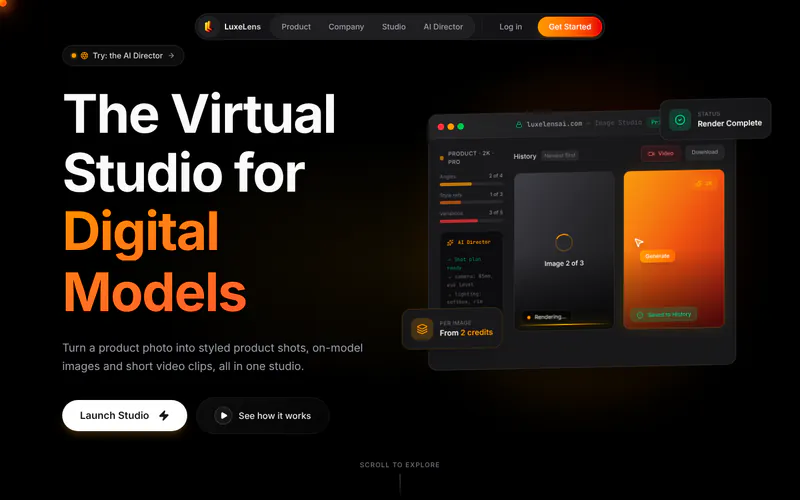
Our generative product-photo and video studio · Gemini on Google Cloud
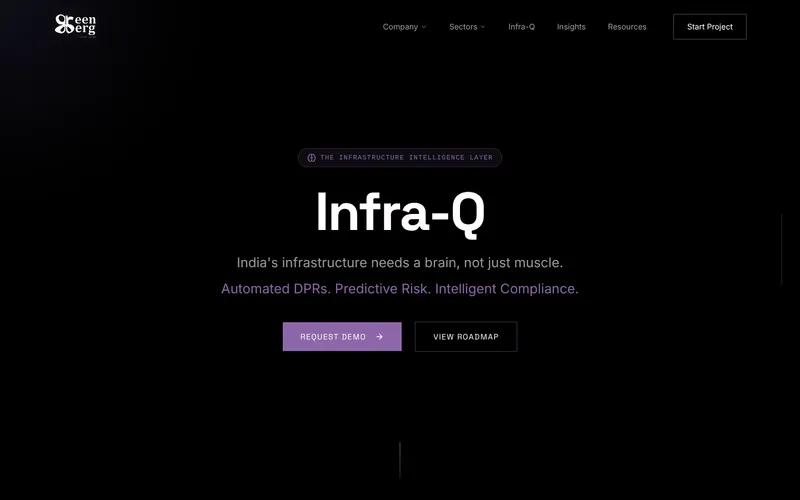
AI infrastructure-intelligence product · In internal beta
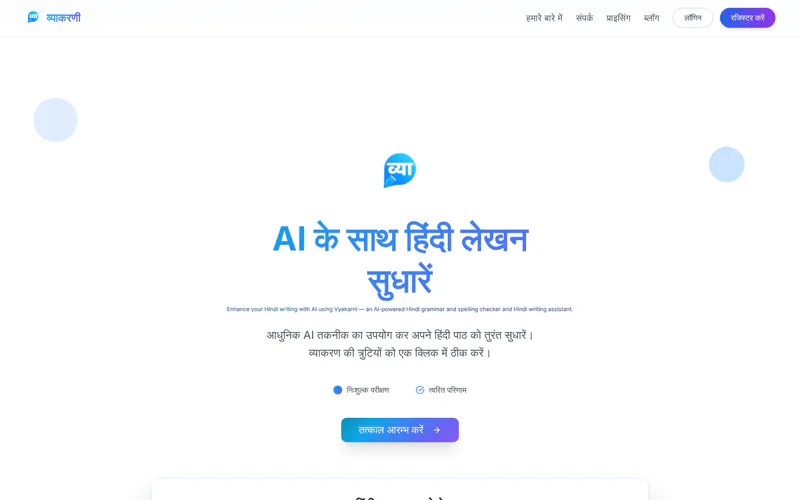
AI Hindi grammar and writing assistant · Built end to end for SNS Innovation Labs
FAQ
Rarely at the start. Most products get further with good retrieval, clear prompts, structured outputs and evaluation. We recommend fine-tuning only when evals show a gap that those can't close.
We route simple tasks to small, fast models, cache stable prompts, batch offline work, and set budgets and alerts. Model usage is billed to your own provider account at cost, so you always see it.
Yes: Postgres, BigQuery, Google Drive, SharePoint and similar sources, with read-only access by default and nothing copied that doesn't need to be.
Further reading

Agents that answer, act and hand off, on Claude and Gemini, inside the tools you already run.
Case studies: LuxeLens AI Studio

Fast, accessible web products, from MVP to platform, engineered to last.
Case studies: Greenberg Engineering, Vyakarni (व्याकरणी), Infra-Q

Turn scattered data and repetitive work into dashboards, pipelines and reviewed automations.
Pip · Softpiper's AI
Ask Pip
Pip is Softpiper's AI. Describe the project and it will ask a few questions, give you a tailored price range for your scope and market, and book a call with the team.